On this page
A niche won't rescue a bad product, but the right niche stacks the odds in your favor — steady demand, room for margin, and audiences you can actually target with ads. Here are eight dropshipping niches worth testing in 2026, what tends to sell inside each one, and how to avoid the categories that look good on paper but are already picked clean.
What makes a dropshipping niche worth it
A niche is not a product — it's a category of buyer intent. Some categories reliably produce testable products; others rarely do, no matter how hard you look. Before you pick one, it should clear the same kind of filter you'd apply to an individual product:
- Steady or rising demand. People in this category buy repeatedly, not as a one-off impulse that fades after a season.
- Room for a real margin. Items typically cost little enough on AliExpress to sell at 2.5–3× and still cover ad spend.
- A genuine problem or wow-factor. Buyers have a specific reason to act now, not just mild curiosity.
- A targetable audience. You can describe who buys this in one sentence, which means you can actually aim ads at them.
Picking the niche is the first filter. The individual product still has to pass its own checks — for the mechanics of that, see our guide on how to find winning AliExpress products.
A quick way to sanity-check a niche before you go product-hunting: try to name three specific problems it solves and three types of buyer who'd care about each one. If you can only come up with "it's useful" or "everyone needs this," you're probably looking at a commodity category rather than a niche — and commodities compete on price against retailers who can beat you on shipping and volume every time.
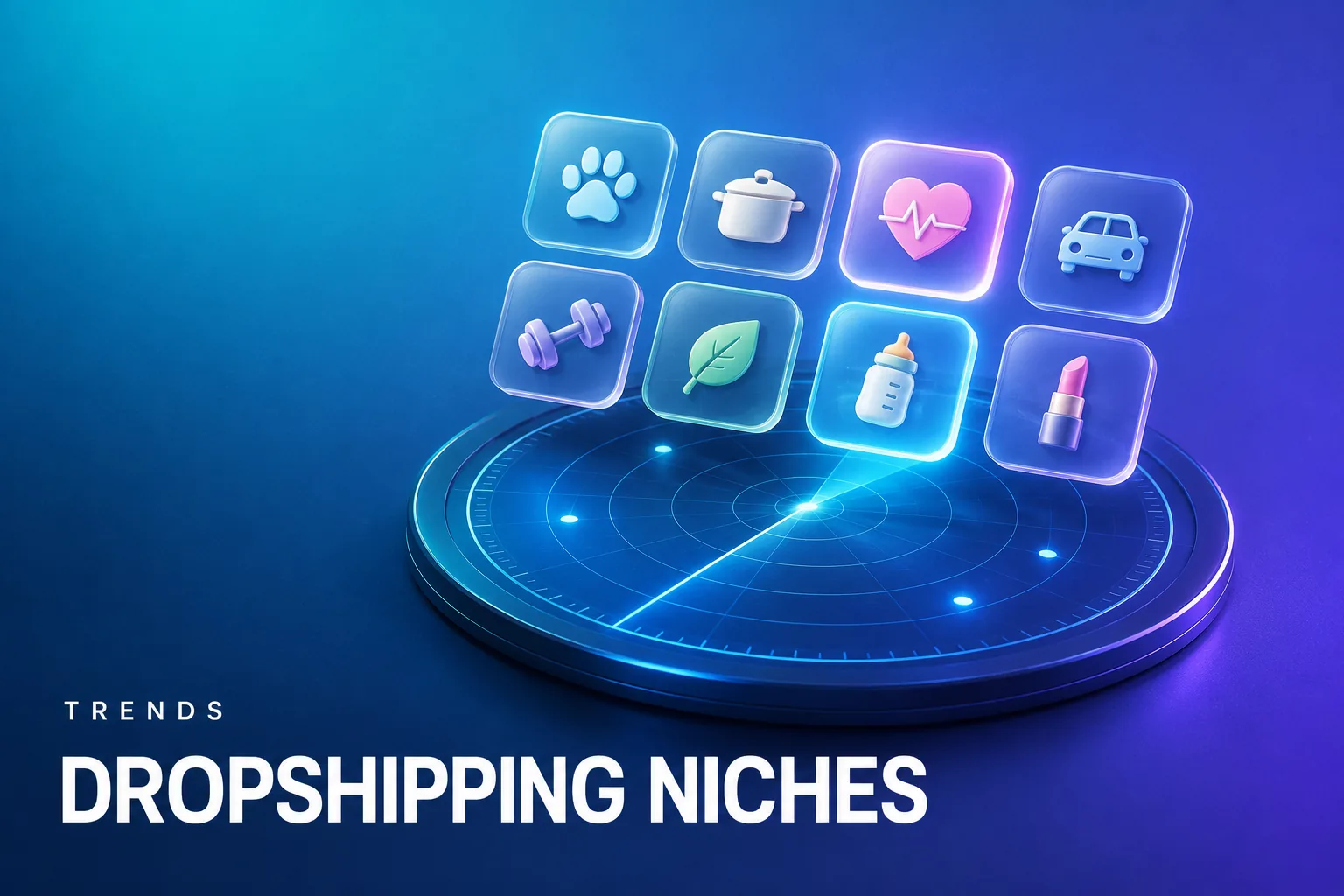
8 dropshipping niches for 2026
None of these are secret. They work because the underlying buyer behavior is stable, not because nobody else has found them. The edge comes from the specific product and angle you pick inside each one.
1. Pet supplies & accessories
Pet owners buy repeatedly and treat purchases as gifts, not chores, which supports impulse spending and decent average order values. Look at slow feeders, interactive toys, grooming tools, travel carriers and orthopedic beds. The best angles here usually come from a specific breed size, age, or behavior issue rather than "for all pets." Caution: generic toys and bowls are heavily saturated — win with a product that solves a specific behavior problem like separation anxiety, shedding or joint pain, not a "cute" generic item.
2. Home & kitchen gadgets
Visual, demo-friendly products that work well in short video ads, in an evergreen category people browse year-round. Think multi-function choppers, cord and cable organizers, air-fryer accessories, and cleaning tools. Caution: this is one of the most crowded categories on AliExpress — a "gadget" alone isn't an angle; you need a specific kitchen frustration it removes.
3. Health, posture & wellness
Remote work and an aging population create real, ongoing demand for physical comfort products, and pain relief is an easy, honest ad angle. Posture correctors, massage guns, compression sleeves and ergonomic supports all fit here. These products age well too — the underlying need (a sore back, tired feet, a stiff neck) doesn't go out of style the way a novelty item does. Caution: avoid medical claims like "cures" or "treats" — ad platforms will reject or ban accounts that make them, and it's misleading regardless.
4. Beauty & skincare tools
Visually demonstrable products with strong repeat-purchase potential and a natural fit for influencer and UGC-style content. LED skincare devices, gua sha tools, hair-removal devices and scalp massagers do well. Caution: perceived quality matters enormously here — a cheap-feeling device tanks reviews fast, so check supplier photos and existing buyer feedback closely before running ads.
5. Car & motorcycle accessories
A large, need-based market with decent margins on small functional parts. Phone mounts, seat organizers, LED lighting kits and detailing tools are reliable sellers. Caution: anything that must fit a specific vehicle model creates return risk — universal accessories are safer to launch with than fitment-dependent ones.
6. Baby & parenting
New parents research heavily and buy repeatedly during a defined life stage, driven by safety and convenience rather than impulse. Feeding tools, sleep aids, monitor accessories and organization systems are common winners. Because the buying window is short but intense — roughly the first two years — repeat purchases inside that window matter more than long-term loyalty. Caution: compliance and safety sensitivity is higher — be extra careful with anything touching a child directly, and check supplier certifications before listing.
7. Fitness & home gym
Interest holds up beyond the January resolution spike, especially for compact, space-saving equipment people can use at home. Resistance bands, adjustable dumbbell accessories, mobility tools and grip trainers fit well. Caution: heavy or bulky items eat your margin in shipping cost — favor lightweight items with high perceived value over anything that ships expensively.
8. Eco / reusable products
A values-driven audience that tends to ladder into repeat purchases across a broader sustainable-lifestyle habit. Reusable food storage, insulated bottles, produce bags and cleaning alternatives are common entry points. Caution: undifferentiated "eco" products compete purely on price against big retailers — win with a specific use case, not just sustainability messaging.
How to find a winner inside a niche
Picking the niche narrows the search; it doesn't finish it. Every individual product inside these categories still needs to clear the same five signals: real order volume, a margin that survives ad spend, manageable competition, demand that's rising rather than fading, and a clear reason to buy now. A niche only tells you where to look — the product still has to earn the ad budget.
In practice this means resisting the urge to pick the first item you see with a lot of orders. Inside "pet supplies," for example, a slow feeder bowl and a generic paw-print keychain both technically belong to the niche, but only one of them solves a specific problem for a specific owner. Work the niche like a shortlist, not a single answer — pull five or six candidates, run each through the checks, and let the numbers eliminate most of them.
Two things are worth checking before you commit: whether demand for the specific product is concentrated in countries where you can actually run ads (see dropshipping product demand by country), and whether the numbers actually leave you a profit after acquisition cost (see dropshipping profit margin). Skipping either check is how a good niche turns into a losing test.
Niches to approach with caution
Some categories keep attracting new dropshippers precisely because they look easy — cheap items, simple listings, obvious demand. That's usually a sign the easy part is already gone and the hard part (differentiation, compliance, or platform restrictions) is what's left.
- Generic phone cases and screen protectors. Near-zero differentiation and margin has been competed away for years.
- Vapes, nicotine products and weapons. Restricted or banned by most ad platforms and payment processors — hard to run a real business on.
- Anything with medical claims. Products marketed as curing or treating a condition invite ad rejections, account bans and, in some markets, legal exposure.
- Branded or trademarked goods. Selling unlicensed branded items risks IP takedowns and permanent account suspensions on ad platforms and marketplaces.
Check your next product in seconds
Paste a keyword or an AliExpress link and get a real buy / test / skip verdict — free, no card, no sign-up for your first product.
Open the radar →Frequently asked questions
What is the best dropshipping niche for beginners?
There is no single best niche for everyone, but beginners usually do better in categories with visual, easy-to-explain products and low safety risk — pet supplies, home and kitchen gadgets, and car accessories are good starting points. They are forgiving to advertise, have clear problem-solution angles, and don't carry the compliance sensitivity of baby products or health claims.
What are the most profitable dropshipping niches?
Profitability depends more on the specific product's margin and ad cost than on the niche label itself, but categories like health and wellness, beauty tools, and pet accessories tend to support higher price points and repeat purchases, which makes 2.5–3x margins easier to hit. The niche sets the ceiling; the individual product still has to clear the demand, margin and competition checks.
Are dropshipping niches saturated in 2026?
The broad categories themselves are not saturated — pet supplies and home gadgets have sold well for years and will keep selling. What gets saturated is a specific product or angle once every store copies the same ad. The fix is picking a specific problem inside the niche rather than the most obvious generic item.
Get winning products in your inbox
Join the free weekly digest — the rising AliExpress products worth testing, before they saturate. No spam, unsubscribe anytime.
Creates a free Blip account with the digest enabled. See our Privacy Policy.